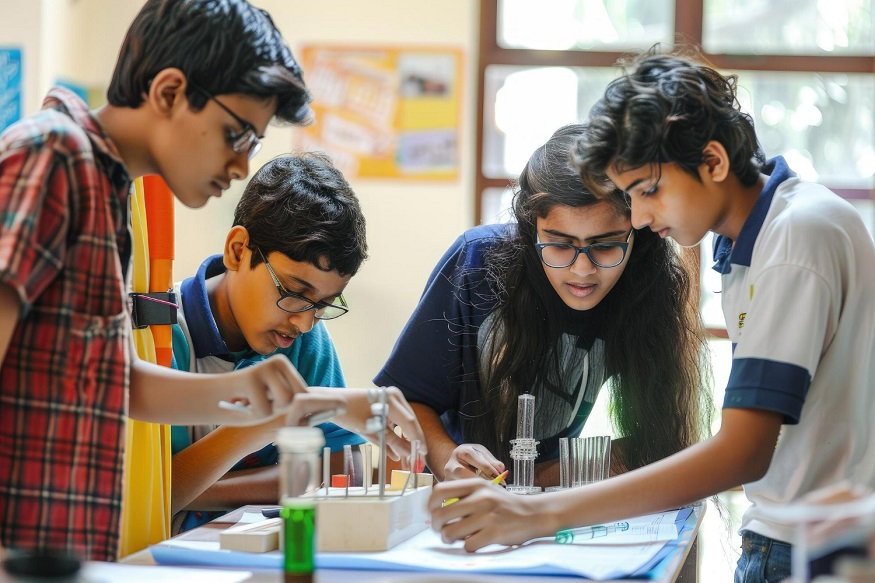
As India’s leading educational framework, the CBSE curriculum continues to evolve in response to the demands of a rapidly changing world. Today, it is not enough for students to simply acquire knowledge they must also know how to apply it, think critically, and navigate real-life scenarios with confidence. This is where skill-based learning in CBSE becomes essential. It is a teaching methodology that bridges theory with practice, helping students develop both academic and life-ready competencies. At every reputable school in Nagpur, this approach forms the backbone of modern, meaningful education.
Understanding Skill-Based Learning in CBSE
So, what exactly is skill-based learning in CBSE? At its core, it is a student-centred approach that goes well beyond textbooks, enabling learners to apply their knowledge in practical, real-world settings. Rather than measuring success by how much a student can memorise, the CBSE curriculum now focuses on what a student can actually do with that knowledge.
- Practical engagement: Students participate in hands-on projects, experiments, and activities
- Real-world application: Learning incorporates examples like growing plants, conducting science experiments, or building models
- Experiential focus: Emphasis is placed on experiential learning rather than theory alone
- Conceptual clarity: Concepts are understood in context, making them easier to retain
- Engagement and interest: Activity-based methods make lessons more dynamic and enjoyable
- Bridging the gap: Connects classroom learning directly to everyday life situations
- Confidence building: Students develop self-assurance through independent thinking and doing
How CBSE Helps Students Gain Practical Skills
One of the most important insights driving the CBSE curriculum forward is that students learn more effectively through active engagement than through passive memorisation. To support this, the board encourages competency-based learning and practical education as central pillars of the academic experience.
Practical Education in Action
- Science laboratories, maths projects, and hands-on activities provide real experiential learning
- Students understand concepts more deeply when they perform tasks themselves rather than just reading about them
Developing Skills Beyond the Classroom
- Activities promote leadership, collaboration, communication, and emotional intelligence
- Encourages holistic personality development and social awareness
Better Exam and Life Preparation
- Builds genuine confidence in solving real-world problems not just exam-oriented answers
- Prepares students for both academic assessments and the challenges of adult life
Combining Knowledge with Skills
- The CBSE curriculum ensures that theory is always grounded in practical understanding
- Students learn not just what to think, but how to apply what they study across diverse situations
Problem-Solving and Critical Thinking in the CBSE Classroom
Developing critical thinking and problem-solving abilities is one of the primary goals of skill-based learning in CBSE. Rather than memorising facts, students learn to examine problems, ask questions, and arrive at workable solutions through structured inquiry.
Acquiring Knowledge Through Experiments
In science classes, students conduct experiments such as a water filtration activity to gain an in-depth understanding of real-world processes. This experiential learning encourages observation, reflection, and independent conclusion-drawing.
Application Across All Subjects
Critical thinking is not confined to science alone. In Social Studies, students analyse historical events and understand their long-term implications. In Mathematics, they use formulae to solve real-life problems, not just textbook questions.
Developing Logical Thinking
Students learn to connect concepts, identify patterns, and make informed decisions based on understanding. This strengthens reasoning capacity and gives them the tools to approach challenges analytically and with confidence.
Life Skills Every Student Should Develop
Education under the CBSE curriculum is about much more than achieving good grades it is about preparing students for life. Through competency-based learning, students develop critical soft skills including communication, decision-making, and time management.
Group projects, presentations, and collaborative experiments build patience, teamwork, and leadership. These real-life abilities empower students to manage daily challenges, build meaningful relationships, and grow into responsible, capable individuals.
Projects and Experiments: The Power of Learning by Doing
Hands-on projects and experiments form an essential component of skill-based learning in CBSE. Students understand and retain concepts far more effectively when they actively participate in the learning process rather than passively receiving information.
- Includes projects, experimentation, model-making, and presentations
- Centres on experiential learning that places students in the role of active problem-solvers
- Makes abstract concepts tangible, accessible, and easier to understand
- Keeps students engaged, curious, and motivated throughout the academic year
- Directly supports the goals of practical education within the CBSE curriculum
Finding the Balance Between Knowledge and Skills
The strongest learners are those who combine theoretical understanding with the ability to act on it. Skill-based learning in CBSE is designed to build exactly this kind of balance ensuring students are academically prepared while also being practically capable.
- Combines in-depth subject knowledge with practical, applicable skills
- Links curriculum content directly to real-life contexts and challenges
- Actively reduces dependence on rote learning and surface-level memorisation
- Builds deeper conceptual understanding across all subjects
- Supports competency-based learning goals embedded throughout the CBSE curriculum
How Teachers Drive Skill Development in CBSE Schools
Skilled educators are the heartbeat of skill-based learning in CBSE. At a quality school in Nagpur, teachers go beyond content delivery they mentor students in exploring, practising, and applying knowledge in meaningful ways.
Mentors, Not Just Instructors
Through project-based tasks and problem-solving exercises, teachers encourage inquiry and independent thinking, helping students take ownership of their learning journey.
Learning Through Real Tasks
Activities such as designing an eco-garden teach students about planning, sustainability, and teamwork simultaneously. This kind of practical education makes learning both meaningful and memorable.
Building Lasting Confidence
With consistent encouragement and the right guidance, students grow more confident in their own abilities. They develop both subject knowledge and practical skills in parallel, setting a strong foundation for the future.
Assessment That Measures Real Understanding
Assessment within the CBSE curriculum now aligns with contemporary teaching strategies. Students are evaluated through projects, presentations, and activities not just written tests. The emphasis is on how students understand, process, and apply what they know, rather than simply arriving at the correct answer.
Effectively Building Skills with Digital Tools
Technology plays an increasingly important role in modern education. Online resources, educational apps, and interactive videos support experiential learning and make complex subjects more accessible. Virtual science labs and coding platforms allow students to gain practical experience even beyond the classroom a key advantage for any school in Nagpur embracing the future of learning.
Everyday Tips for Students to Strengthen Their Skills
Students can accelerate their growth by making small, intentional choices every day. These habits directly reinforce skill-based learning in CBSE and build lasting confidence.
- Maintain a dedicated project notebook to record observations and ideas
- Join school clubs, science fairs, or debate teams to practise communication skills
- Solve application-based problems regularly, not just exam-style questions
- Plan homework in advance and practise time management daily
- Discuss ideas with classmates to strengthen reasoning and articulation
- Learn from mistakes reflection is a core part of competency-based learning
Overcoming Challenges in Skill-Based Learning
Some students may find the shift to practical education challenging, particularly if they have grown accustomed to rote-based learning. Initial confusion, a fear of failure, or a lack of guidance can make the transition feel daunting.
However, with consistent teacher support, parental encouragement, and step-by-step practice, these challenges are entirely manageable. Competency-based learning builds progressively each small success strengthens a student’s belief in their own capabilities and motivates them to take on greater challenges.
How Parents Can Support Skill Development at Home
A child’s learning does not stop at the school gate. Parents play a vital role in reinforcing skill-based learning in CBSE through everyday activities at home. Simple tasks like cooking together, organising a household project, or exploring DIY crafts provide rich experiential learning opportunities.
This kind of hands-on engagement at home complements what students learn in the classroom, boosting self-esteem, improving daily life skills, and reinforcing the practical education mindset that the CBSE curriculum encourages.
Exam Preparation Without Losing the Skill Focus
A common concern among parents and students is whether focusing on skills comes at the cost of exam performance. The answer is a clear no. Competency-based learning within the CBSE curriculum actually improves academic results by building genuine comprehension.
Practising application-based and real-world questions boosts analytical confidence, making it easier to tackle both standard and higher-order exam questions. Students who develop strong skills consistently perform better in tests and in life beyond them.
The Long-Term Benefits of a Skill-Oriented Education
Students who embrace skill-based learning in CBSE gain advantages that extend well beyond their school years. They emerge as more independent, creative, and adaptable individuals qualities that are highly valued in higher education and professional environments.
Universities and employers consistently seek candidates with strong analytical, collaborative, and communication skills. By prioritising the CBSE curriculum’s competency-based approach, students lay the groundwork for a successful, well-rounded future.
Using Skill-Based Tasks to Promote Creativity
Creativity flourishes when students are given the freedom to explore, experiment, and express themselves. Skill-based learning in CBSE provides exactly this freedom through structured yet open-ended, activity-based tasks.
- Art, creative writing, and model-building make learning more engaging and personally meaningful
- Students develop the confidence to express ideas in their own unique way
- Experiential learning through doing encourages original thought and innovative problem-solving
- Open-ended tasks promote curiosity and a genuine love of learning
- Students who create feel more accomplished and motivated to continue growing
Collaboration and Communication Through School Projects
Teamwork is one of the most essential skills a student can develop. Through competency-based learning in the CBSE curriculum, students participate in group projects, collaborative presentations, and structured discussions activities that teach them how to listen, share, negotiate, and contribute.
This practical, people-centred education prepares students for real-world professional environments where collaboration and effective communication are indispensable.
Time Management: A Skill for Academic and Life Success
The ability to manage time effectively is one of the most transferable skills a student can acquire. Skill-based learning in CBSE helps students build this skill organically through project deadlines, event participation, and structured activity scheduling.
With consistent practice, students learn to balance their academic commitments, hobbies, and personal responsibilities more effectively a habit that pays dividends throughout their lives.
Building Self-Confidence Through Practical Activities
Confidence is not taught it is earned through experience. When students take on independent projects, solve real problems, and present their work, they build a genuine sense of accomplishment. Practical learning under the CBSE curriculum reinforces this process by allowing students to learn from mistakes and grow stronger through each attempt.
Over time, this cultivates resilience, self-awareness, and the courage to take on new challenges with a positive mindset.
Frequently Asked Questions (FAQs)
What is skill-based learning in CBSE?
It is an educational approach within the CBSE curriculum where students not only understand academic concepts but also learn how to apply them in practical, real-world situations.
Does skill-based learning help in exams?
Yes. Students who engage in competency-based learning develop deeper conceptual understanding, which translates directly into better exam performance particularly for application and higher-order questions.
What is experiential learning?
Experiential learning is an educational method where students gain knowledge by actively participating in tasks and experiments, rather than solely through textbooks and lectures.
How can parents support skill-based learning at home?
Parents can encourage skill development through everyday activities like cooking, organising projects, visiting museums, or engaging children in problem-solving conversations at home.
Which schools in Nagpur focus on skill-based learning?
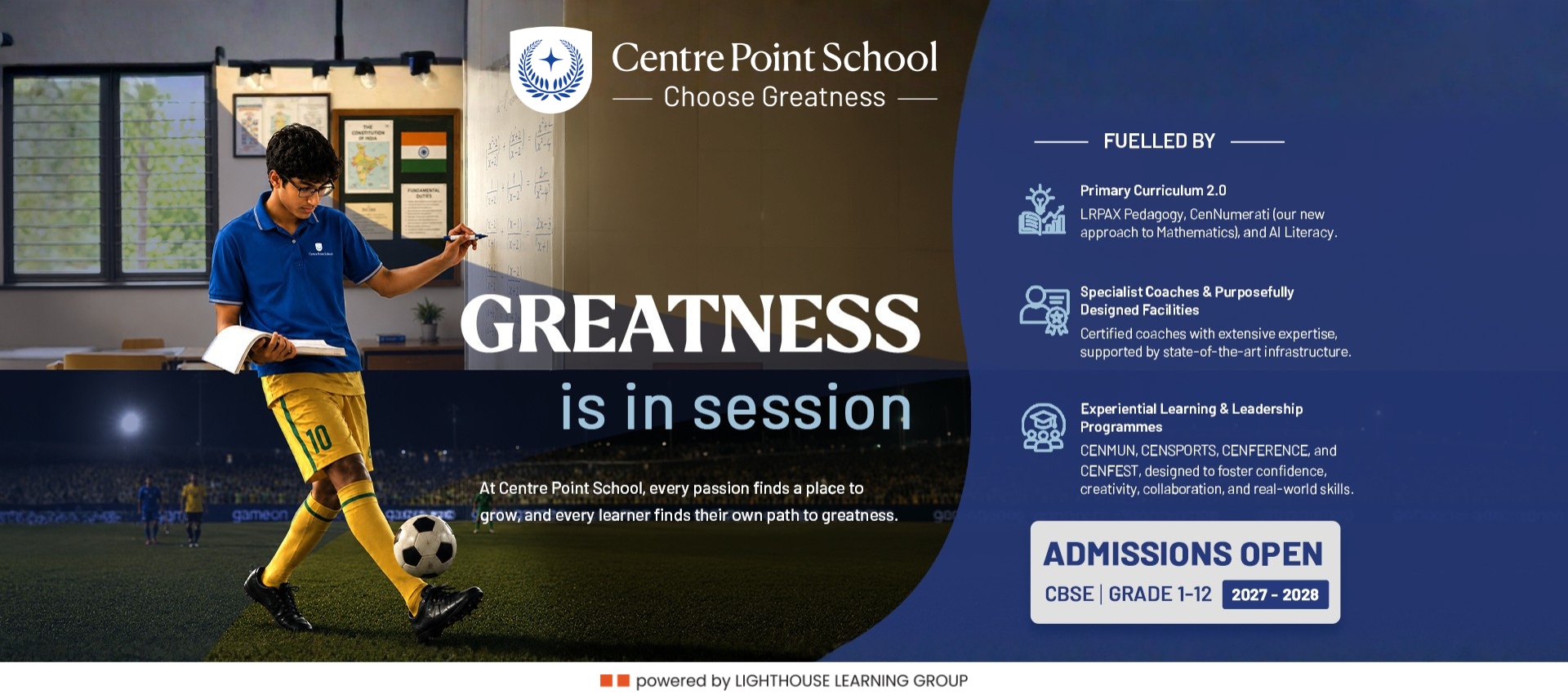
Centre Point School, a trusted CBSE school in Nagpur, integrates skill-based and competency-based learning across all its campuses, making it a preferred choice for families considering CBSE school admission in Nagpur.
Conclusion
Skill-based learning in CBSE represents a transformative shift in how education is delivered and experienced. By prioritising experiential learning, practical education, and competency-based development, the CBSE curriculum empowers students to grow not just as learners but as capable, confident individuals.
Understanding what skill-based learning in CBSE truly means and actively embracing it ensures that students are well-prepared for examinations, higher education, and the demands of adult life. By participating, exploring, attempting, and reflecting, every student can make learning a rewarding and impactful experience.
You May Also Like
How to Complete the CBSE Syllabus Faster: A Study Plan for Students
A practical, structured guide to help students manage their CBSE curriculum effectively and build strong study habits a perfect complement to skill-based learning.
Important Topics in the CBSE Syllabus to Score 90%+ in Exams
Discover the high-weightage topics across subjects that every student should master to achieve top scores while staying aligned with the CBSE curriculum’s competency-based approach.